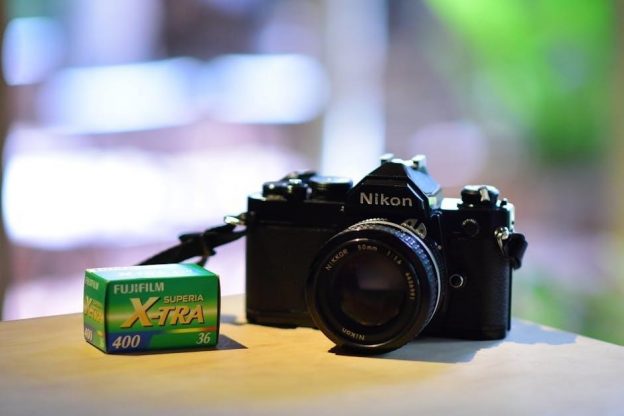
The Nikon F3‚ a professional-grade SLR‚ boasts extensive online resources‚ including manuals and community forums. Italian and Russian Nikon enthusiasts actively discuss its features and usage‚ demonstrating its enduring appeal and global following.
Overview of the Nikon F3
The Nikon F3‚ launched in 1980‚ quickly became a cornerstone for professional photographers‚ celebrated for its robust mechanical build and advanced features. Online resources‚ including downloadable manuals (accessible via right-click “Save Target As”)‚ are readily available‚ catering to both seasoned users and newcomers. These manuals‚ often in multiple languages like Italian‚ detail every aspect of operation.
The camera’s enduring popularity is evident in thriving online communities – like the Nikon Club Ufficiale – where users share experiences‚ troubleshooting tips‚ and discuss accessories. Discussions range from flash usage to identifying manufacturing dates via serial numbers‚ showcasing a dedicated user base. The F3’s legacy continues‚ supported by repair services and readily available parts‚ ensuring its longevity in the digital age.
Historical Significance of the F3
The Nikon F3 arrived during a pivotal moment in photography‚ bridging the gap between fully mechanical and electronically assisted SLRs. Its introduction in 1980 solidified Nikon’s reputation for quality and innovation‚ becoming a favored tool for photojournalists and professionals worldwide. The availability of detailed manuals‚ even decades later – often found through online communities and forums – underscores its lasting impact.
The camera’s robust construction and reliable performance made it a workhorse in demanding environments. Italian photographers‚ for example‚ actively discuss its use with specialized lighting equipment. The continued existence of dedicated Nikon Clubs (like the Nikon Club Ufficiale) and repair services demonstrates a commitment to preserving this iconic camera‚ ensuring its historical relevance endures alongside modern digital technology.
Key Features and Specifications
Nikon F3 manuals detail its mechanical operation‚ shutter system‚ and advanced TTL metering. Online resources confirm its compatibility with motor drives and interchangeable viewfinders‚ enhancing its versatility.
Mechanical Operation and Build Quality
The Nikon F3 is renowned for its robust‚ entirely mechanical operation‚ a testament to its professional design. Manuals emphasize the camera’s durable construction‚ built to withstand demanding use. Its precision-engineered shutter and film transport mechanisms operate smoothly without reliance on electronic components‚ ensuring reliability even without batteries (though metering requires power).
The body is crafted from high-quality materials‚ providing a substantial feel and exceptional durability. Discussions within online communities highlight the F3’s ability to endure years of heavy use with minimal maintenance. The manual details the precise movements of levers and dials‚ showcasing the camera’s intricate mechanical design. This build quality contributes to the F3’s longevity and continued functionality for photographers today.
Shutter System Details
The Nikon F3 features a horizontally-traveling‚ cloth focal-plane shutter‚ offering a wide range of speeds from 1 second to 1/2000th of a second‚ plus Bulb (B) mode. Manuals detail the precise operation of the shutter‚ emphasizing its smooth and quiet function. It’s a fully mechanical system‚ contributing to the camera’s reliability.
The shutter speed dial provides clear and tactile settings‚ allowing for quick adjustments in various shooting conditions. Online forums discuss the importance of proper shutter speed selection for achieving desired effects. The F3’s shutter is known for its accuracy and consistency‚ crucial for professional photography. Understanding the interplay between shutter speed and aperture‚ as outlined in the manual‚ is key to mastering the camera’s capabilities.
Metering System Explained
The Nikon F3’s metering system is a cornerstone of its functionality‚ offering both center-weighted and spot metering options. Manuals thoroughly explain how to utilize these modes for accurate exposure readings in diverse lighting scenarios. The system relies on a TTL (Through-The-Lens) measurement‚ providing real-time feedback based on the light entering the lens.
Users can select from various metering patterns to suit their creative vision and subject matter. Online communities highlight the importance of understanding the nuances of each mode; The F3’s metering is renowned for its precision‚ enabling photographers to consistently achieve well-exposed images. Proper calibration and understanding of the system‚ as detailed in the manual‚ are essential for optimal performance.
TTL Metering Capabilities
The Nikon F3’s TTL (Through-The-Lens) metering is a pivotal feature‚ allowing for precise exposure measurement directly through the viewfinder. This system dynamically assesses light reflected from the scene‚ providing real-time adjustments for optimal results. Manuals detail how to interpret the viewfinder’s metering indicators‚ guiding users toward correct exposure settings.
TTL metering significantly simplifies complex lighting situations‚ particularly when using flash. It enables photographers to achieve consistent and accurate exposures without extensive guesswork. Online forums emphasize the importance of understanding how TTL interacts with different lenses and accessories. Mastering the F3’s TTL capabilities unlocks its full potential for capturing stunning images in varied conditions.
Metering Range and Accuracy
The Nikon F3’s metering system operates effectively across a broad range of lighting conditions‚ as detailed in available manuals. It accurately measures light from extremely low to very bright scenes‚ ensuring reliable exposure readings. However‚ accuracy can be influenced by factors like extreme backlighting or highly contrasting subjects.
Users should consult the manual for specific EV (Exposure Value) ranges and limitations. Online communities discuss practical experiences‚ noting that the F3’s metering performs exceptionally well in typical photographic scenarios. Understanding the system’s nuances‚ and compensating for challenging conditions‚ is key to maximizing its precision. Proper calibration and consistent use contribute to consistently accurate exposures.

Using the Nikon F3: A Practical Guide
Nikon F3 operation‚ detailed in manuals‚ involves film loading‚ shutter speed adjustments‚ and aperture control. Online forums offer practical advice from experienced users.
Loading and Unloading Film
The Nikon F3’s film loading process‚ detailed within its manual and discussed across online Nikon communities‚ requires precision. First‚ open the camera back using the film release lever. Insert the 35mm film cartridge into the left-side chamber‚ ensuring it seats correctly. Pull the film leader across the camera body to the take-up spool on the right. Advance the film using the winder‚ checking that the sprocket holes engage properly.
Close the camera back firmly. To unload‚ press the film rewind button on the bottom plate and turn the rewind crank until the film is fully retracted into the cartridge. Open the back and remove the film. Proper film handling ensures optimal image quality and prevents damage to the camera mechanism‚ as highlighted in various online resources and user guides.
Setting the Shutter Speed
The Nikon F3’s shutter speed is adjusted via a dial located on the top plate‚ a core function detailed in the camera’s manual and frequently discussed within Nikon enthusiast forums. This dial offers a range typically spanning from 1 second to 1/2000th of a second‚ plus bulb (B) for long exposures. Selecting the appropriate shutter speed is crucial for controlling motion blur and achieving desired exposure.
Faster shutter speeds freeze action‚ while slower speeds allow more light in but can introduce blur. The ‘B’ setting keeps the shutter open as long as the shutter release button is pressed. Understanding the interplay between shutter speed‚ aperture‚ and ISO is fundamental to mastering the F3‚ as emphasized by experienced users sharing knowledge online.
Aperture Control and Depth of Field
Aperture is controlled via the aperture ring on the Nikon F3 lens itself‚ not the camera body – a key detail found within the camera’s documentation and online communities. The f-stop number determines the lens opening size‚ influencing both light intake and depth of field. Lower f-numbers (e.g.‚ f/2.8) create a shallow depth of field‚ ideal for isolating subjects with blurred backgrounds.
Higher f-numbers (e.g.‚ f/16) yield a greater depth of field‚ keeping more of the scene in focus. Mastering aperture control is vital for creative image making. Nikon Club Ufficiale and similar forums highlight how understanding this relationship allows photographers to manipulate focus and achieve artistic effects‚ a skill frequently discussed by users.
Focusing Techniques with the F3
The Nikon F3 relies on manual focusing‚ demanding a direct connection between the photographer and the subject. Focusing is achieved by rotating the focusing ring on the lens until the image appears sharp in the viewfinder. Split-image and microprism collars within the viewfinder aid in precise focusing‚ features detailed in available manuals and frequently discussed within online Nikon communities.
Pre-focusing on a specific point and then recomposing the shot is a common technique. Zone focusing‚ where you estimate the hyperfocal distance‚ is also effective for street photography. Nikon Club Ufficiale members often share tips on mastering these techniques‚ emphasizing practice and understanding the lens’s focusing characteristics for consistently sharp results.

Advanced Features and Functions
The Nikon F3’s adaptability shines through interchangeable viewfinders and motor drive compatibility. Enthusiasts in online forums discuss utilizing these features‚ enhancing functionality.
Interchangeable Viewfinders
The Nikon F3’s modular design allows for a variety of viewfinder options‚ significantly expanding its versatility. Users can swap between different finders to suit their shooting style and specific needs. These include the standard prism finder‚ as well as waist-level finders and action finders‚ each offering a unique perspective and handling experience.
Online communities‚ like the Nikon Club Ufficiale‚ frequently discuss the benefits of each viewfinder type. The high-eyepoint finder‚ mentioned in available manuals‚ is particularly useful for eyeglass wearers‚ providing a full field of view without vignetting. Understanding the compatibility and proper installation of these viewfinders‚ detailed in the camera’s documentation‚ is crucial for maximizing the F3’s potential. The ability to customize the viewing experience is a key element of the F3’s enduring appeal.
Motor Drive Compatibility
The Nikon F3 is renowned for its compatibility with various Nikon motor drives‚ enabling continuous shooting for action and sports photography. Primarily‚ it works seamlessly with the MD-11 Motor Drive‚ significantly increasing frame rates beyond the standard single-shot capability. This attachment requires a dedicated power supply‚ often a separate battery pack‚ to operate effectively.
Discussions within online Nikon communities‚ such as the Nikon Club Ufficiale‚ highlight the importance of proper synchronization between the camera and the motor drive. The manual details the correct installation procedure and potential troubleshooting steps. Utilizing a motor drive transforms the F3 into a powerful tool for capturing fast-paced events‚ though it adds weight and complexity to the overall system. Understanding the power requirements and operational nuances is key to successful use.
Using the Depth of Field Preview
The Nikon F3’s depth of field preview lever allows photographers to visually assess the extent of focus at a chosen aperture before taking the picture. Activating this lever stops down the lens to the selected f-stop‚ simulating the final image’s depth of field. This is crucial for landscape and portrait work where precise focus control is paramount.
While the manual details its operation‚ online forums emphasize that using the preview darkens the viewfinder image. This can make focusing more challenging‚ especially in low light. Experienced users learn to compensate by briefly engaging the preview‚ confirming focus‚ and then releasing it before pressing the shutter. Mastering this technique ensures images are sharp exactly where intended‚ maximizing creative control over the final result.

Troubleshooting Common Issues
Nikon F3 users often seek assistance online with shutter‚ metering‚ and film advance problems. Community forums provide solutions and guidance for maintaining this classic camera.
Shutter Problems and Solutions
Addressing shutter issues on the Nikon F3 often requires careful diagnosis. If the shutter doesn’t fire‚ check the battery compartment for corrosion‚ as this is a common culprit discussed within online communities. A sluggish shutter speed might indicate old lubricant needing replacement – a task best left to a qualified repair technician.
Sticky shutter curtains can sometimes be gently exercised by repeatedly setting and releasing the shutter at various speeds. However‚ avoid excessive force. If the self-timer malfunctions‚ it could be a sign of internal electrical issues. Remember‚ attempting complex repairs without proper knowledge can cause further damage.
Online forums are invaluable resources for troubleshooting specific shutter problems‚ offering advice from experienced F3 users and links to repair services. Always consult the camera manual or a professional before attempting any internal repairs.
Metering System Errors
Nikon F3 metering system inaccuracies can stem from several sources. A consistently incorrect reading often points to a dirty or malfunctioning light sensor within the viewfinder. Ensure the sensor is clean and free of obstructions. Battery issues can also cause erratic metering behavior; a fresh battery is always a good first step in troubleshooting.
If the meter displays an overexposure or underexposure warning even in appropriate lighting‚ the camera may require calibration by a professional technician. Online Nikon communities frequently discuss potential causes and solutions for specific metering errors.
Remember to verify the ISO setting‚ as an incorrect ISO value will directly impact the meter’s accuracy. Consult the F3 manual for detailed instructions on resetting and calibrating the metering system. Seeking expert repair is recommended for complex issues.
Film Advance Issues
Problems with the Nikon F3’s film advance often relate to mechanical components. A common issue is a sluggish or incomplete film advance‚ potentially caused by dried lubricants within the mechanism. Regular cleaning and relubrication by a qualified technician are crucial for smooth operation. Ensure the film is loaded correctly and securely onto the take-up spool; improper loading can lead to jamming.
If the film counter isn’t advancing‚ or the advance lever feels unusually stiff‚ avoid forcing it. This could cause further damage. Online Nikon forums detail similar experiences and potential fixes.
The F3 is compatible with motor drives‚ which can sometimes contribute to advance issues if not properly connected or functioning. Refer to the F3 manual for guidance on motor drive installation and troubleshooting. Professional servicing is advised for persistent film advance problems.

Maintenance and Care
Regular cleaning‚ careful lens handling‚ and proper battery management are vital for the Nikon F3’s longevity. Professional servicing ensures optimal mechanical function and performance.
Cleaning the Camera Body
Maintaining the Nikon F3’s exterior requires gentle care to preserve its functionality and aesthetic appeal. Begin by using a soft‚ dry cloth to wipe down the body‚ removing dust and fingerprints. For stubborn grime‚ slightly dampen the cloth with a mild lens cleaning solution – avoid harsh chemicals or solvents. Pay particular attention to the film chamber and viewfinder eyepiece‚ ensuring they are free from debris. Be extremely cautious around the meter cell‚ as it’s sensitive to damage.
Avoid applying liquids directly to the camera; always apply to the cloth first. Regularly inspect the battery compartment for corrosion and clean as needed. The leatherette covering can be gently cleaned with a damp cloth‚ but avoid excessive moisture. Remember that the F3 is a mechanical camera‚ and excessive cleaning can disrupt its delicate mechanisms. Prioritize gentle‚ regular maintenance over aggressive cleaning attempts.
Lens Care and Maintenance
Nikon F3 lenses‚ renowned for their optical quality‚ demand careful maintenance to ensure peak performance. Regularly inspect the lens elements for dust‚ fingerprints‚ or fungus. Use a blower to remove loose particles‚ followed by a soft lens brush for stubborn dust. For fingerprints‚ apply a small amount of lens cleaning solution to a microfiber cloth and gently wipe in a circular motion. Avoid excessive pressure‚ which could damage the coating.
Pay close attention to the lens mount‚ ensuring it’s free from debris that could hinder proper connection. Store lenses in a dry‚ dust-free environment when not in use. Periodically check the aperture blades for smooth operation. Never attempt to disassemble the lens yourself; professional cleaning is recommended for internal issues. Proper lens care extends the lifespan and maintains the image quality of your Nikon F3 system.
Battery Replacement and Handling
The Nikon F3 utilizes a specific battery type for its metering system; typically‚ a 5.6V lithium battery (CR1/3N or equivalent). When replacing the battery‚ ensure the camera is switched off to prevent potential electrical issues. Locate the battery compartment‚ usually on the bottom of the camera‚ and carefully open it. Observe the correct polarity when inserting the new battery – incorrect insertion can damage the camera.
Handle batteries with care‚ avoiding contact with metal objects that could cause a short circuit. Dispose of used batteries responsibly‚ following local regulations for lithium battery disposal. It’s advisable to carry a spare battery‚ especially during extended shooting sessions‚ as the F3’s metering relies entirely on battery power. Regularly check the battery compartment for corrosion and clean if necessary.

Accessories for the Nikon F3
Numerous accessories enhance the F3’s functionality‚ including compatible lenses‚ motor drives‚ and winders. Enthusiasts discuss and utilize these additions‚ expanding the camera’s capabilities.
Recommended Lenses
The Nikon F3‚ being a fully mechanical camera with interchangeable lenses‚ truly shines when paired with quality optics. While a vast array of Nikon lenses are compatible thanks to the F-mount‚ certain lenses are frequently recommended by users and collectors. The 50mm f/1.4 Nikkor-S is a classic choice‚ offering excellent sharpness and a beautiful bokeh‚ ideal for portraits and general photography. For wider landscapes‚ the 28mm f/2.8 Nikkor-S provides a versatile perspective.
Telephoto options‚ like the 85mm f/1.8 Nikkor‚ are also popular for isolating subjects. Many photographers also appreciate the older AI-S lenses for their build quality and optical performance. Exploring the used market reveals a wealth of affordable and exceptional lenses that complement the F3’s robust construction and timeless appeal. Remember to check compatibility and condition before purchasing.
Motor Drives and Winders
The Nikon F3’s mechanical nature allows for seamless integration with various motor drives and winders‚ significantly enhancing shooting speed and efficiency. The MD-3 motor drive is a popular choice‚ offering continuous shooting at approximately 3 frames per second when used with six AA batteries. This is invaluable for action photography or capturing fleeting moments.
Alternatively‚ the hand-grip with a winder (like the HN-1) provides a more compact solution for faster film advance than manual winding‚ without the bulk of a full motor drive. These accessories connect to the camera’s bottom‚ providing power and control. Online communities dedicated to the Nikon F3 frequently discuss the compatibility and functionality of different motor drive options‚ offering valuable insights for potential buyers and users.
Other Useful Accessories
Beyond motor drives and lenses‚ a range of accessories can greatly enhance the Nikon F3 experience. Dedicated Nikon finders‚ offering different magnification and focusing aids‚ expand the camera’s versatility. Diopters correct vision without glasses‚ crucial for precise focusing.
Furthermore‚ various focusing screens are available‚ altering the view through the viewfinder to suit different shooting styles. The Nikon Club Ufficiale‚ an active online community‚ highlights the importance of these often-overlooked components. Considering a remote shutter release minimizes camera shake during long exposures. Finally‚ a quality camera bag protects your investment‚ ensuring the F3 and its accessories remain safe during transport and storage‚ extending its lifespan for continued use.
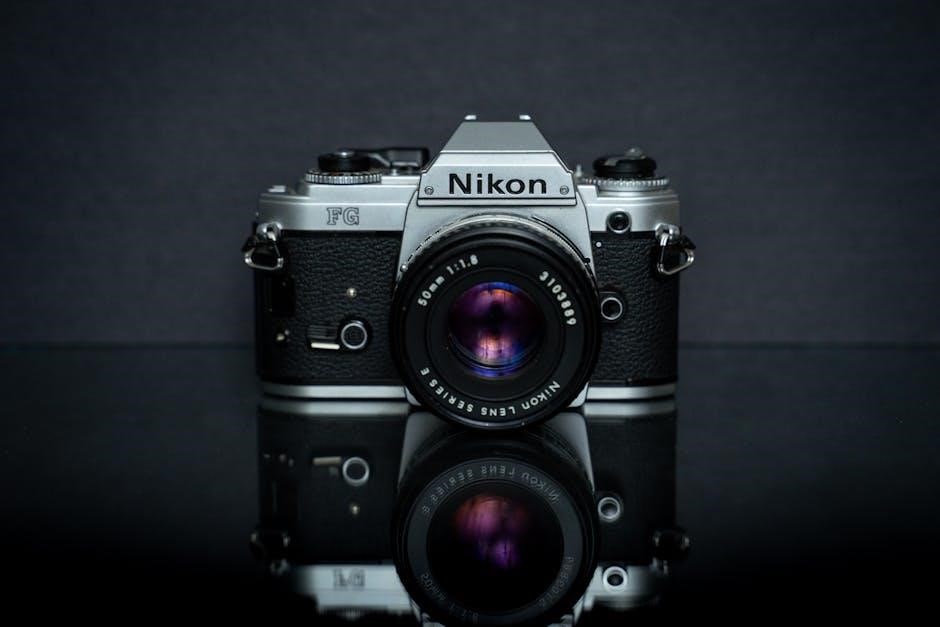
Nikon F3 vs. Contemporary Cameras
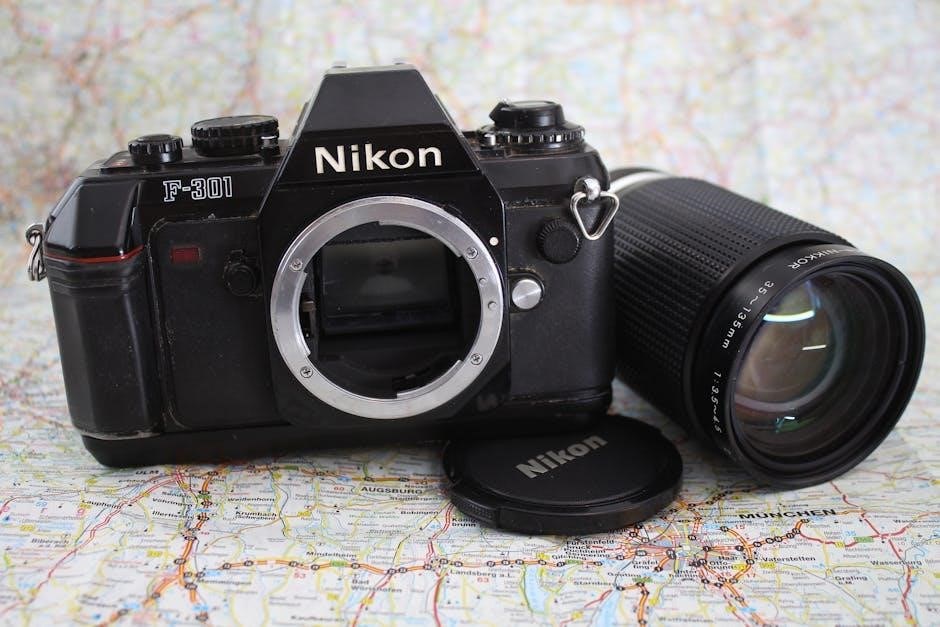
While modern cameras offer automation‚ the F3’s manual control fosters a deeper understanding of photography. Online communities demonstrate continued F3 usage and repair support.
Strengths and Weaknesses
The Nikon F3’s enduring strength lies in its robust mechanical operation and exceptional build quality‚ offering reliability even today. Its fully mechanical shutter‚ independent of battery power for basic function‚ is a significant advantage. However‚ compared to contemporary digital cameras‚ the F3 lacks conveniences like instant review‚ automatic exposure modes‚ and high ISO performance.
Finding readily available parts and skilled repair services can be challenging‚ though online communities offer support and resources. The reliance on film adds ongoing costs and the time-consuming process of development. Despite these weaknesses‚ the F3’s tactile experience‚ precise controls‚ and the artistic control it affords continue to attract photographers seeking a connection to traditional methods. Manuals and forums aid in navigating its intricacies.
Legacy and Continued Use
The Nikon F3 cemented its legacy as a workhorse for photojournalists and professionals during the 1980s and beyond‚ renowned for its durability and precision. Even today‚ a vibrant community of photographers continues to utilize the F3‚ drawn to its fully mechanical nature and the unique aesthetic qualities of film photography.
Online forums‚ like the Nikon Club Ufficiale‚ demonstrate ongoing interest and support for the camera‚ with users sharing knowledge and troubleshooting tips. Access to manuals and resources facilitates continued use‚ while the camera’s robust construction ensures longevity. The F3 isn’t merely a vintage item; it’s a functional tool‚ appreciated for its tactile experience and the deliberate process it demands‚ proving its enduring relevance.

Resources and Further Information
Numerous online communities and forums‚ including the Nikon Club Ufficiale‚ offer support and manuals. PDF versions of the Nikon F3 manual are readily available online.
Online Communities and Forums
Delving into the world of the Nikon F3 often leads photographers to vibrant online communities and dedicated forums. These platforms serve as invaluable resources for users seeking assistance‚ sharing knowledge‚ and connecting with fellow enthusiasts. The “Nikon Club Ufficiale‚” as highlighted in online discussions‚ stands out as a prominent example‚ fostering a culture of photographic exploration and Nikon product support.
Within these forums‚ users frequently exchange information regarding the F3’s manual‚ troubleshooting tips‚ and repair guidance. Discussions range from locating downloadable PDF versions of the manual to deciphering specific features and functionalities. The collaborative spirit within these communities ensures that even decades after its release‚ the Nikon F3 remains a well-supported and actively discussed camera.
Repair Services and Parts
Maintaining a classic camera like the Nikon F3 often necessitates access to specialized repair services and replacement parts. Given its age‚ finding readily available components can sometimes present a challenge‚ making knowledgeable repair technicians crucial. While the provided text doesn’t directly detail specific services‚ the active online communities surrounding the F3 frequently discuss reliable repair options and sources for parts.
Enthusiasts often share experiences and recommendations regarding technicians skilled in servicing these older Nikon models. Locating a manual‚ as previously discussed‚ can aid in identifying specific parts requiring replacement during repairs. The enduring popularity of the F3 suggests a continued demand for repair services‚ ensuring that skilled professionals remain available to restore and maintain these iconic cameras for future generations of photographers.